
Back To (Home) School — Our Master Supply Guide
Please note that this article contains affiliate links to products referenced. To learn more about our use of affiliate links, please read our Affiliate Disclosure.
Let me say this first — I am not a homeschool expert. Not by any means. In fact, I come to you with only one full year of experience and I don’t ever want to pretend that I have it locked in. But the beauty of home educating is that you are always learning right alongside your kids and the reality is that I have learned a thing or two since this time last year. It really didn’t take long to find a flow and system that has worked well for us.
For our first year, I tried to keep our supplies and space pretty lean and simple, which worked really well as we settled into our routines and how we prefer to do things. It made me realize that you really do not need much in order to foster a beautiful learning environment. There are a lot of homeschool supply guides out there and I always like to peruse and see how others are doing it to see if or how it could apply to our family, but the reality is that you don’t need very much. I’m currently knee deep into preparing for a new school year and thought it may be fun to share a little guide of our favorite supplies, but do want to encourage you to just take and leave what you need with this list. It’s simply intended to inspire or encourage you if you’d like to peek in to how we do things. That’s it.
How We Approach Learning
I think it will be helpful for me to give a little description to our approach with home education because at the end of the day, how you homeschool will impact the supplies you deem necessary and/or helpful. We recently joined a homeschool co-op and one of my favorite parts of meeting new families is seeing how diverse the home education spectrum really is. Each family brings their own flair through what they choose to prioritize, what they are passionate about, what they are naturally inclined towards, and the curriculum they choose to follow (or not follow).
Again, we’re only a year into this journey and so I don’t have fancy labels for our approach, but I can say that some of our family’s priorities include reading good literature together (novels, picture books, poetry, and musical lyrics), creativity and easy access to creative exploration, learning together, and exposure coupled with practice. We also prioritize a well-rounded approach by focussing on a particular topic and then touching on various subjects through the lens of that particular topic. We try to give our kids access to resources, like good books and ample art supplies, so they have opportunities to explore on their own and practice on their own terms. However, we do still value structure and order and have some consistency in our days and subjects. If you were putting a label on it, you could say that we probably fit best inside the Charlotte-Mason approach.
Good Books Are a Given (Our Favorite Books to Have on Hand)
Books have always been one thing that I carry no guilt about buying and supplying my kids with. However, over the years, I have slowly grown in my understanding and appreciation for what makes for a good book. Our learning is centered around books and we utilize the library to its full potential, (I once self-consciously asked our librarian how many books you can check out at once — one hundred. The answer is one hundred items at one time), but there are a few very helpful reference book resources that we have enjoyed collecting.
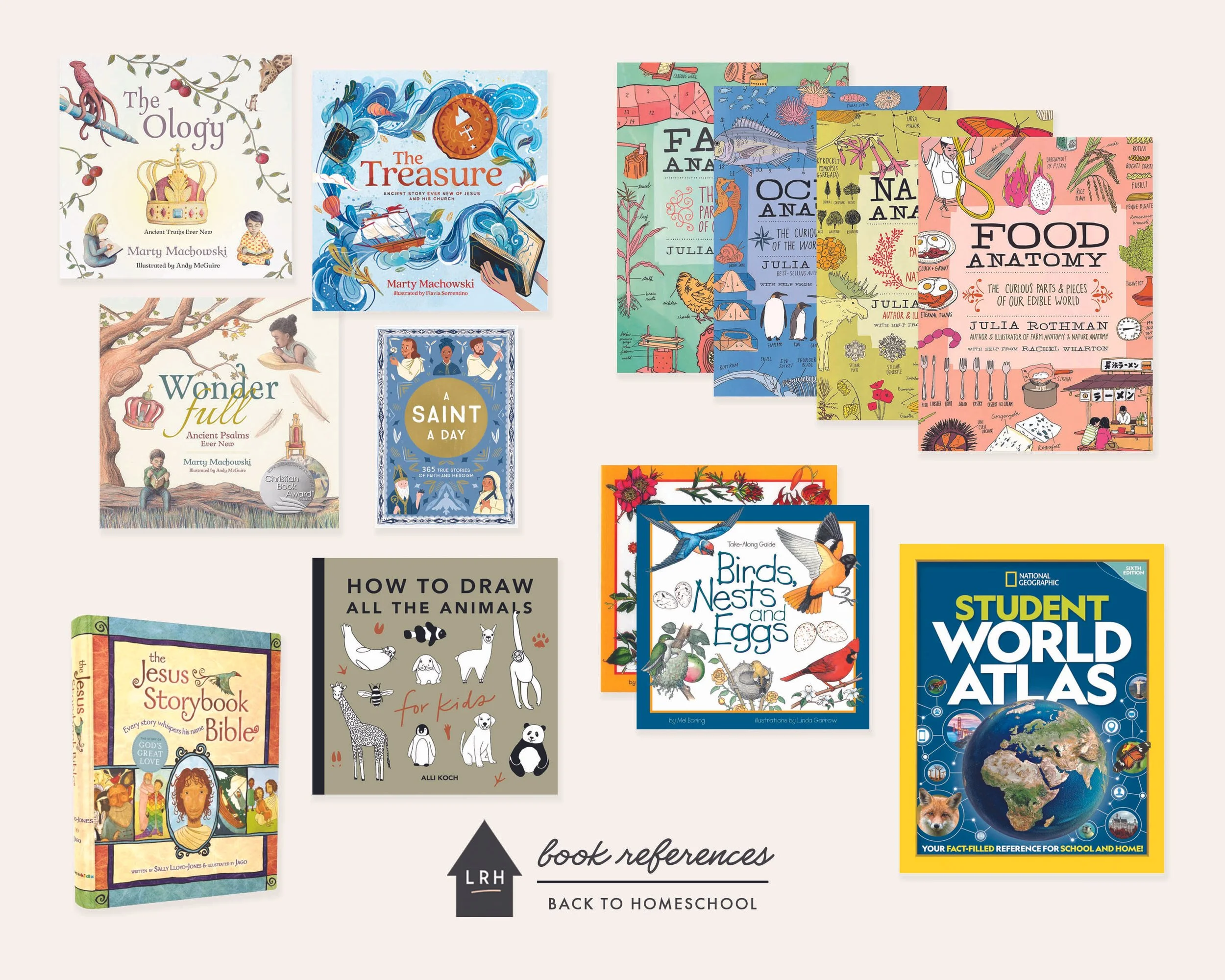
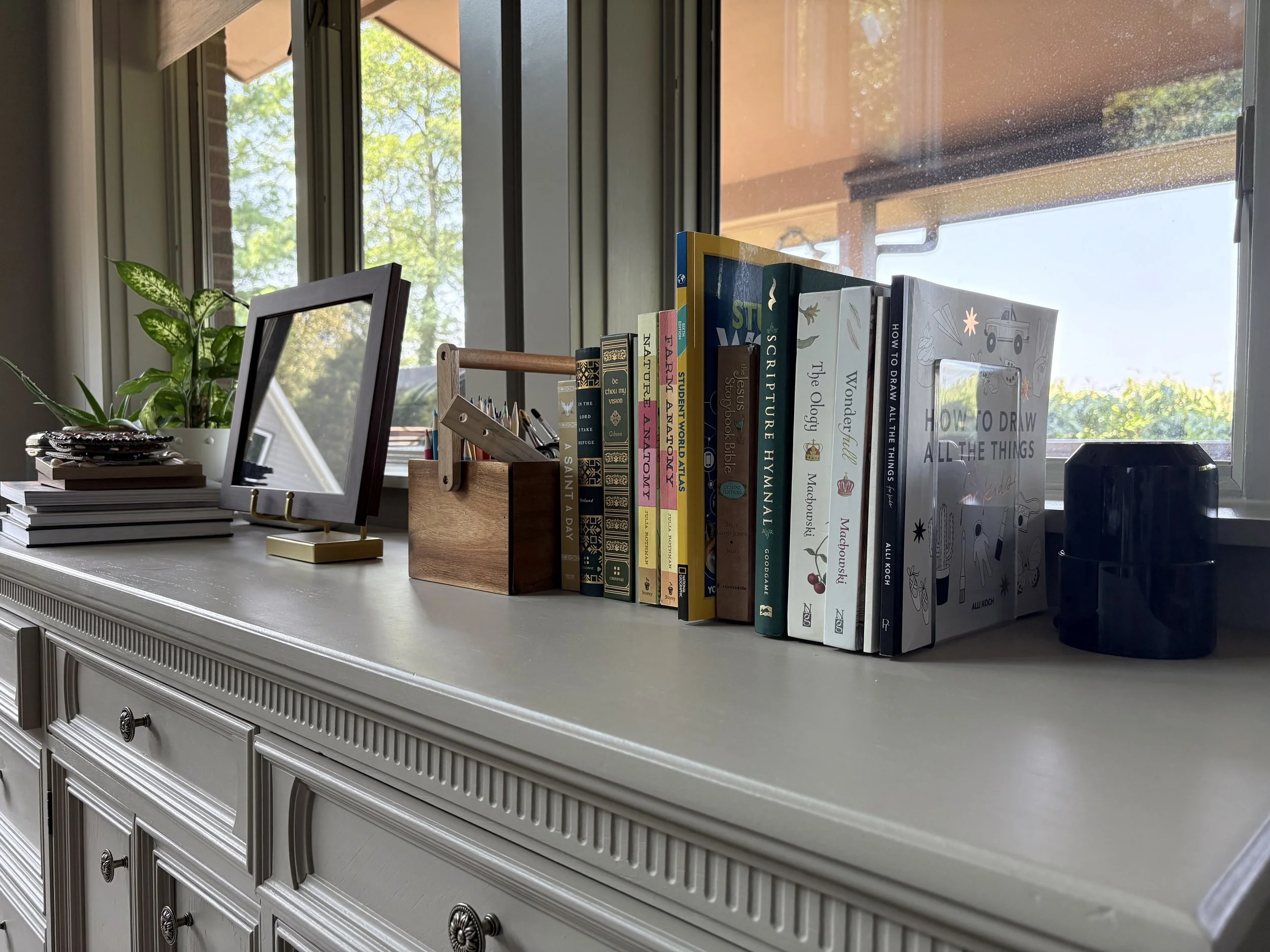
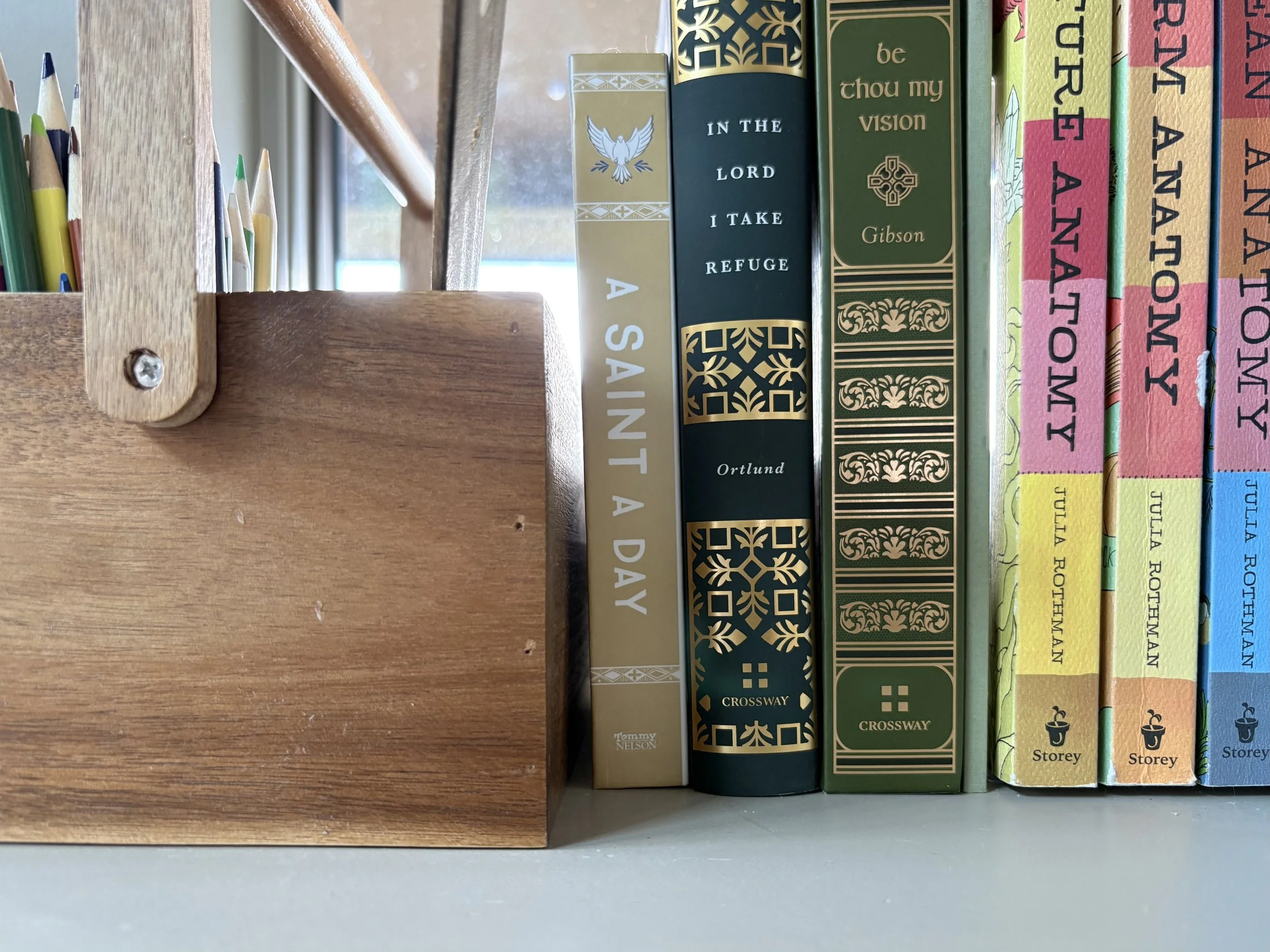
The series of children’s theology books written by Marty Machowski have been a go-to morning time resource for our family. These are written so clearly and beautifully that even I grew in my understanding of theological concepts. I would recommend The Ology as a must-read for any Christian family with school aged children, but Machowski’s books about the Psalms and the Church are equally as wonderful. On that note, The Jesus Storybook Bible is also a great resource to have for young children because it helps give a “big picture” understanding of the Bible. We personally also enjoy one-page-a-day books like A Saint a Day to help us grow in our understanding of Church history. In terms of general learning, we like to keep good reference resources available and the Julia Rothman series are unparalleled. The illustrations make the concepts easy for children to understand, while still offering a wealth of knowledge about a lot of things. We reference the Nature Anatomy and Farm Anatomy books regularly in our science study. On the topic of nature reference, we also like the Take-Along Guide series of illustrated books and have collected a good handful of them as we’ve seen them pop up at thrift stores or book sales. A world atlas is another book we find ourselves referencing regularly as a way of understanding the geographical setting of stories we read or tracking upcoming travel plans. These easy drawing reference books are also convenient to have on hand for notebooking and just flat out creative fun.
Most of our formal studies are based around reading and referencing books, so we have and love many books on different subjects. For those types of topic-specific books, we like to use our library and also have a great local thrift shop with a huge, well-organized book section that I like to periodically browse through. If I’m in a bind, I also occasionally purchase books from ThriftBooks or Amazon. Maybe one day soon I’ll write a big round up of all our favorite picture books.
Learning Doesn’t Only Happen In One Place (Our Favorite Items to Set the Mood)
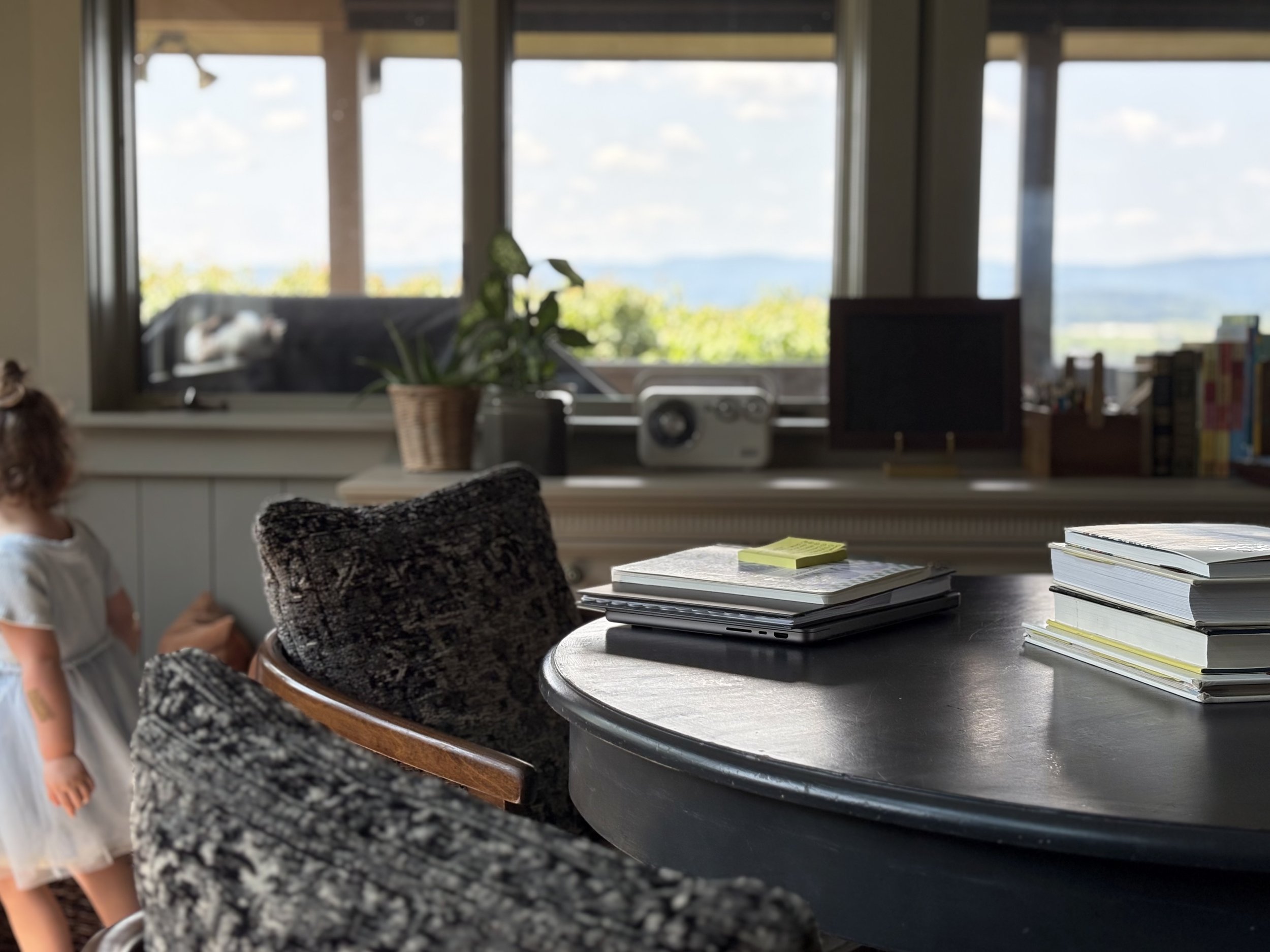
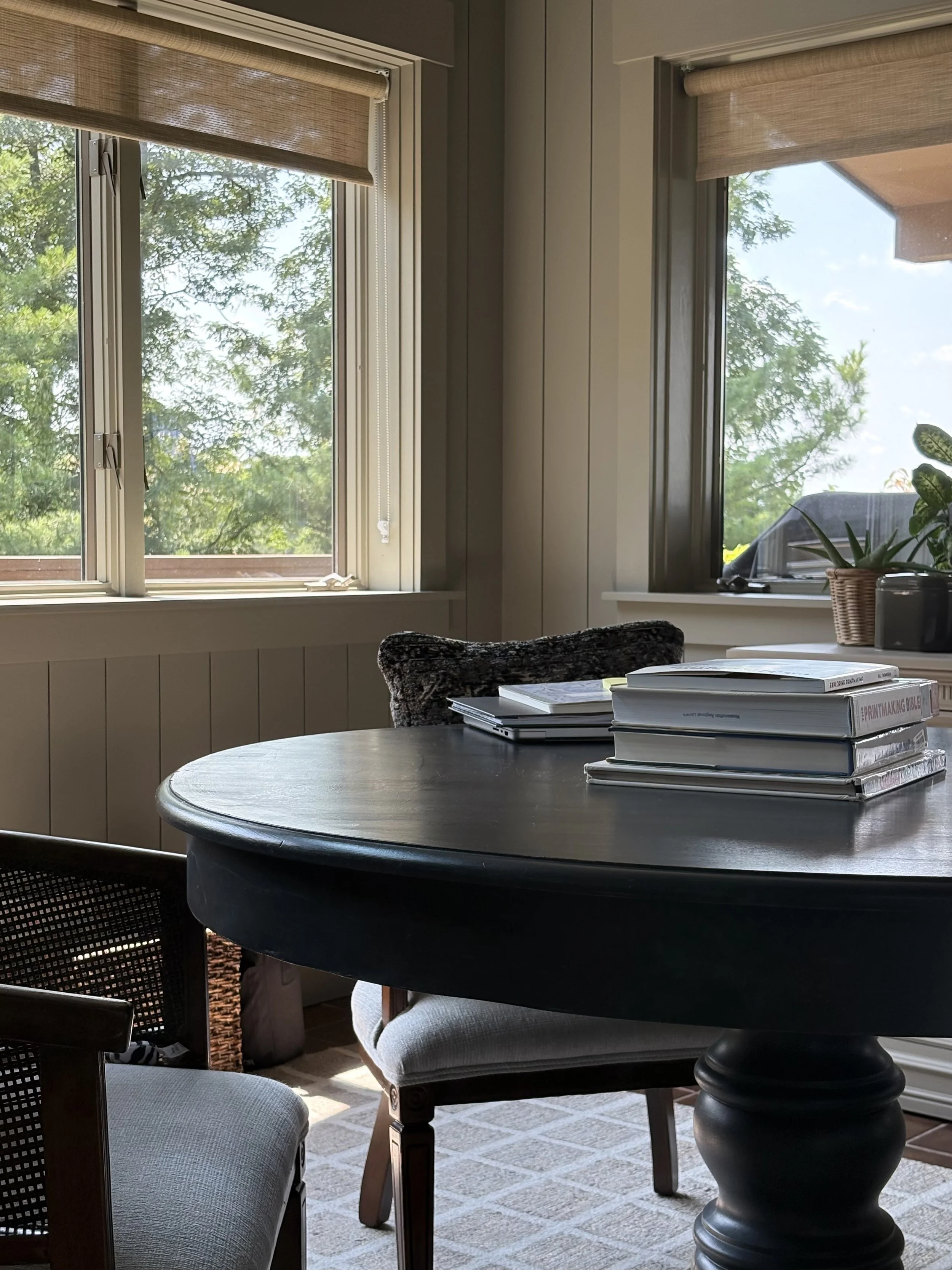
We did most of our school work from our dining room table last year as we lived through a renovation and then worked on getting settled into our home. It was a great reminder that you do not need a designated school room to homeschool. In fact, one of the biggest draws for home educating is that you can get away from the assumption that learning only happens in one type of environment. We still don’t technically have a designated school room, but we do a lot of our learning at the round table in our sunroom. That may be our home base these days, but our favorite supplies for good learning spaces can be integrated anywhere in the home.
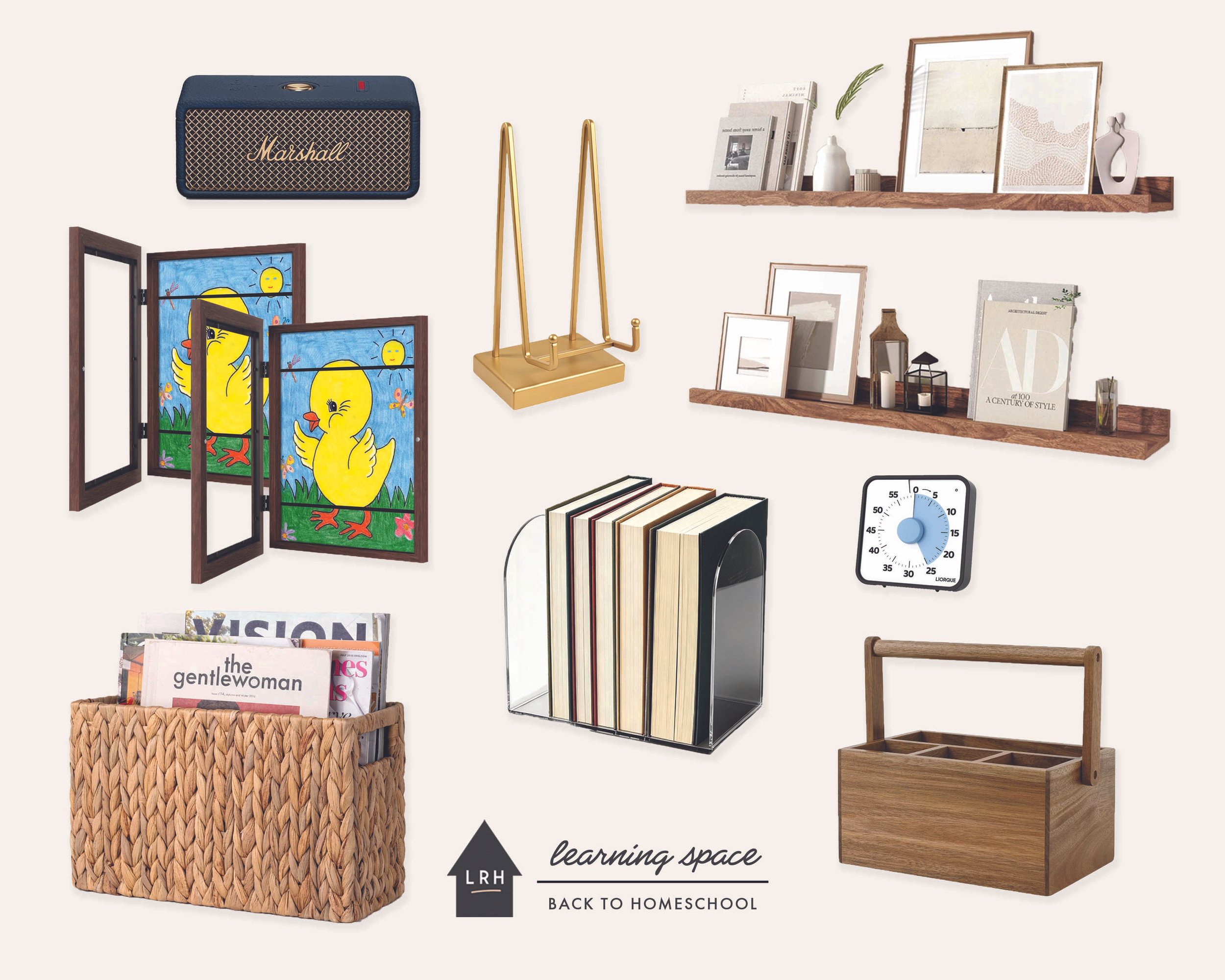
I personally like when our supplies can integrate with our existing home environment, so I prioritize investing in pieces that blend in with our existing decor. I use a seagrass magazine organizer to hold our different types of paper supplies, have lots of clear acrylic bookends available for organizing our most-used books, and keep a bluetooth speaker within reach to set the mood with music. I’ve had some form of picture ledges in all of our homes over the years to easily display the beautiful books available to our girls for browsing or showing off some artwork, both handmade and collected pieces. A wooden utensil caddy doubles as a convenient pencil and supply caddy. I love using these visual timers for all sorts of purposes, including schoolwork, setting expectations for transitions, and tracking potty breaks with our youngest. I just recently added these easy to update picture frames for displaying our weekly artist study and picked up this display stand to hold one of the frames on a table for easy viewing. What I love most about all of these pieces is that they won’t only serve us in our formal schooling. I can use any of these pieces in different areas of our home if our needs ever change.
How We Stay On Track (Our Favorite Tools to Stay Organized)
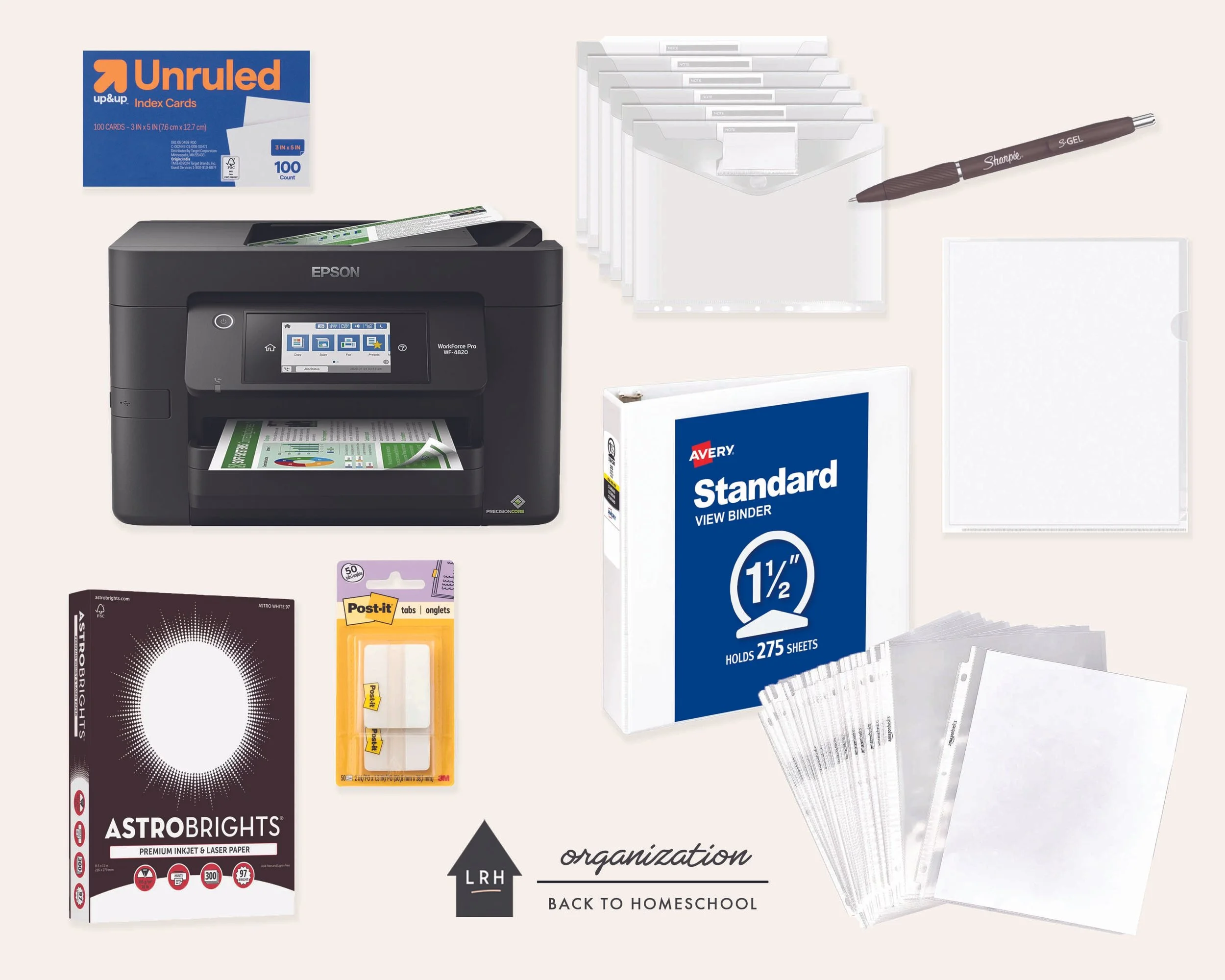
Beyond the fun and the beauty, there definitely is a practical side to keeping everything organized and on track while schooling at home. Again, I try to keep things really simple because I don’t want a ton of supplies sitting around our living space. A number one priority has been having a good quality printer at our disposal and always being stocked with quality printer paper. I’m constantly printing copywork pages or free coloring pages and it’s more economical to do that as the need arises rather than sending it somewhere to be printed. We use this adjustable date stamp every single day to easily track the date on our complete work. Since we only have young kids, my system so far has been to keep everything we need in one central binder. The Avery binders live up to their higher upfront cost because of their longevity. Inside the binder, I organize items using simple dividers,sheet protectors, and these awesome three-hole clear envelope folders.These clear document sleeves are handy for papers we regularly reference (like poems or hymns) and can even be used with wet erase markers for writing and drawing practice. A large supply of blank index cards has been invaluable as we make timeline cards or math resources, Post-It tabs help me easily keep track of where we are in books and curriculum, and good pens are essential for keeping my own notes neat and organized. These items aren’t always the prettiest, but they are workhorses in our process.
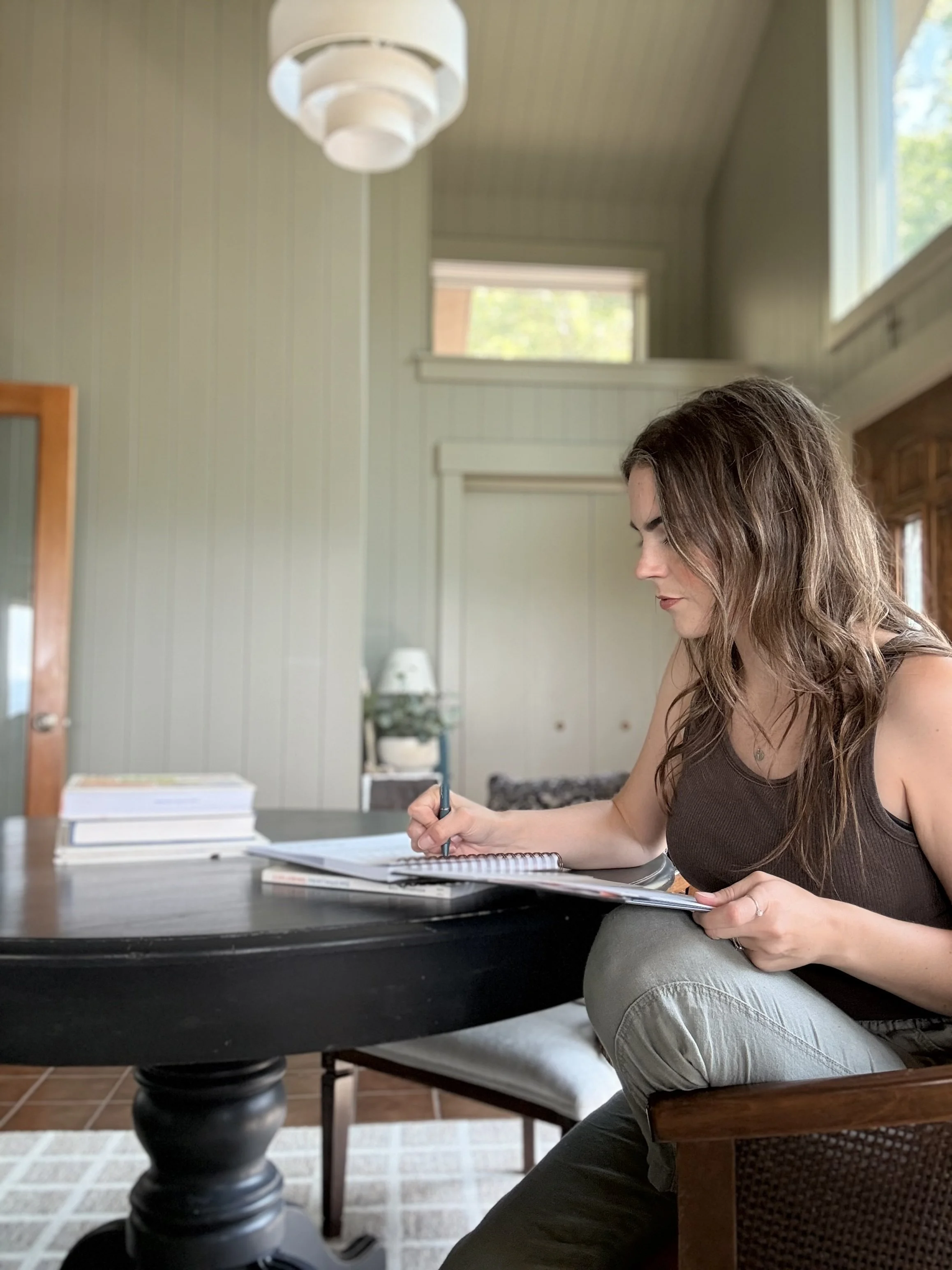
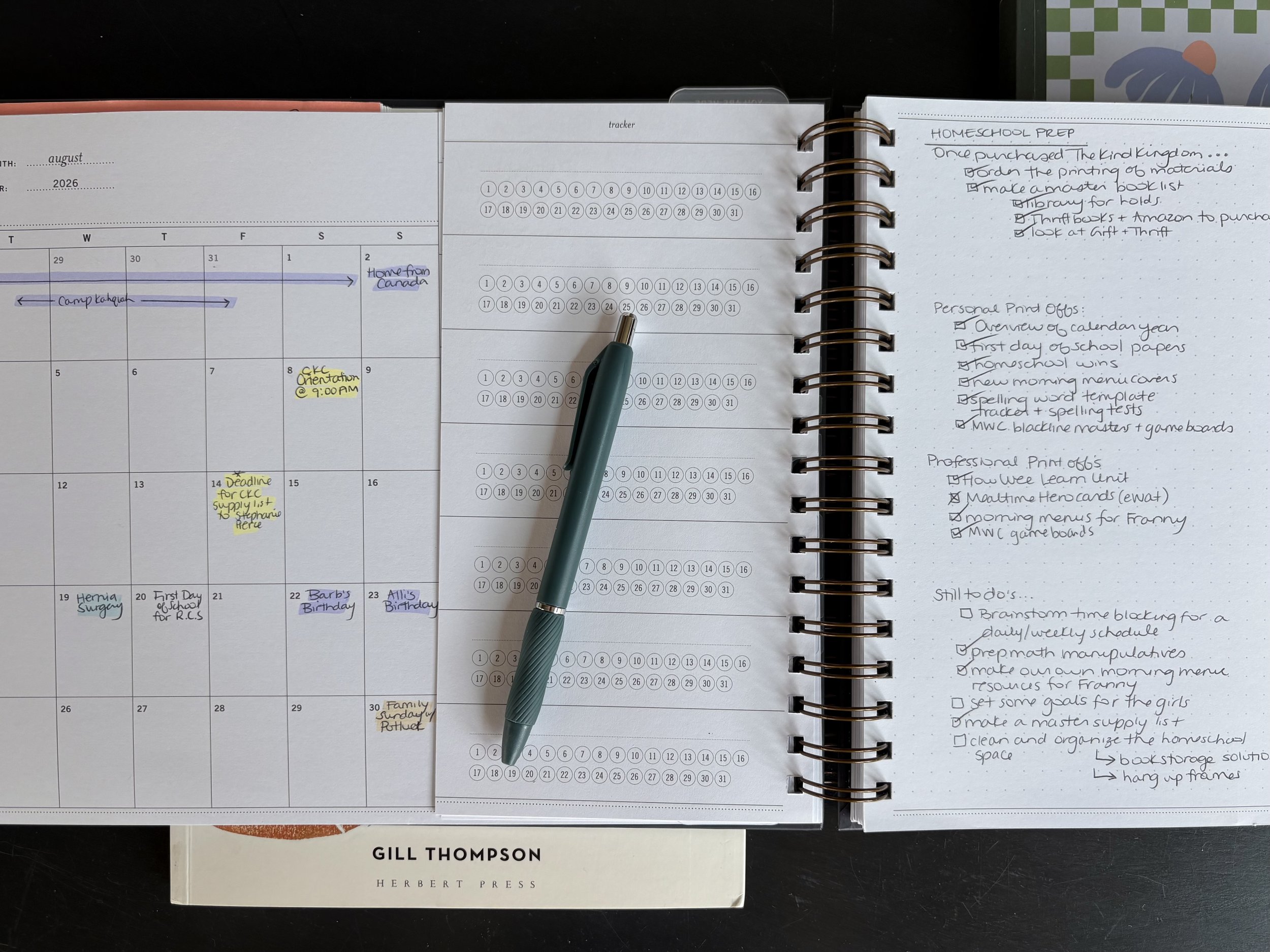
Another game-changer for me this year has been to get on top of staying organized with a good planner. I was gifted the Nancy planner from Laurel Denise Planners and it is an organization dream-come-true. I have been resistant to using a homeschool planner because I don’t like the idea of compartmentalizing that part of my life and having different planners for different purposes. This Laurel Denise planner has been the answer to those woes.
I can use this planner for everything. It’s a large planner, leaving me plenty of space to fill it in with all the things — school, co-op, extracurricular activities, social events, appointments, travel dates, and even blog, project, and video planning ideas — so my entire life is laid out in one central place. It provides all the necessary boxes in one convenient spread, which helps me see my month, week, and overall to-do list in one glance. It’s specific enough to be helpful, but general enough that I can use it exactly as I need to without the extra frills that most planners have. It’s simple, but comprehensive. It’s beautiful, but minimal. It has honestly been the perfect tool to keep me organized.
Getting Creative Is Always An Option (Our Favorite Art Supplies to Keep On Hand)
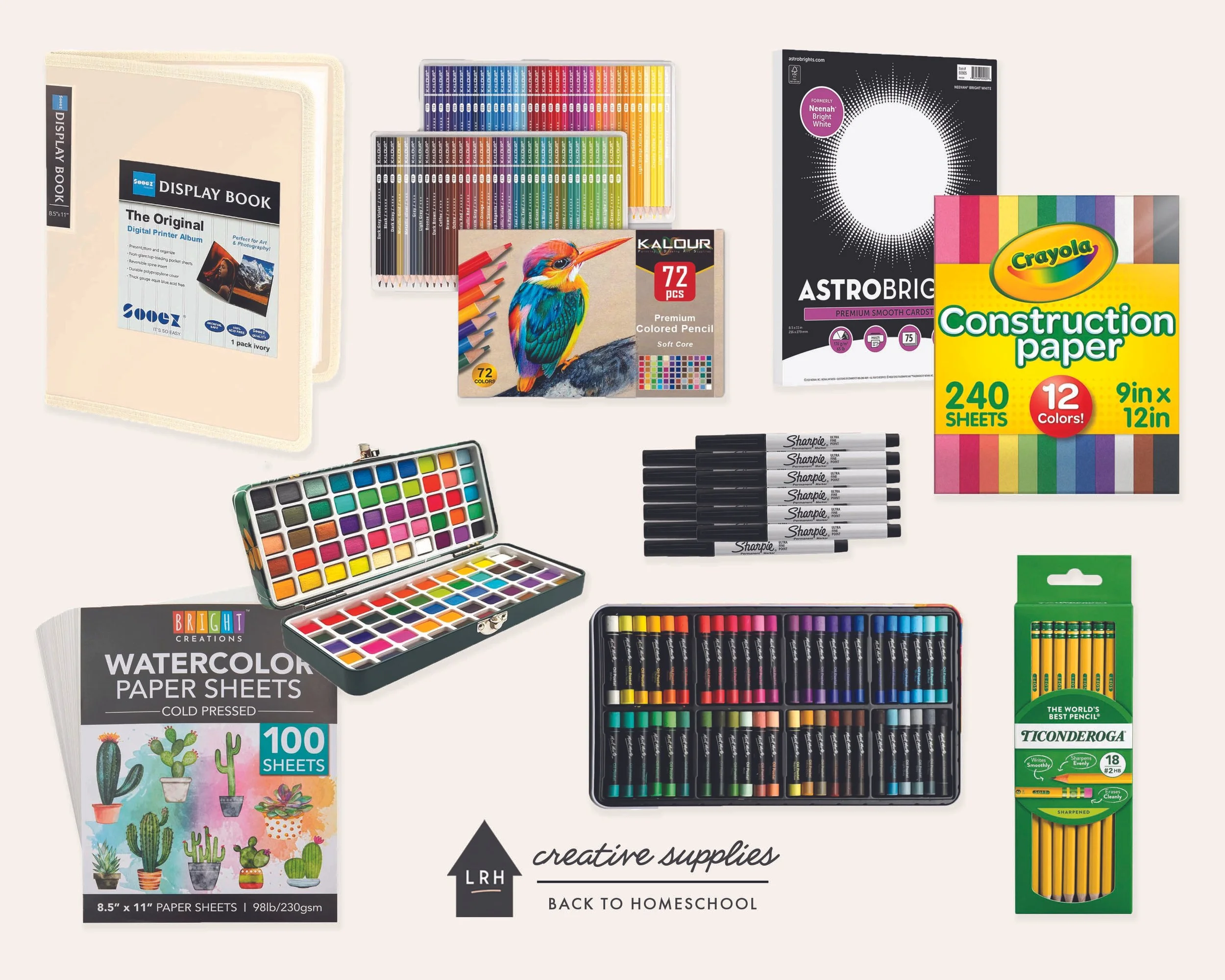
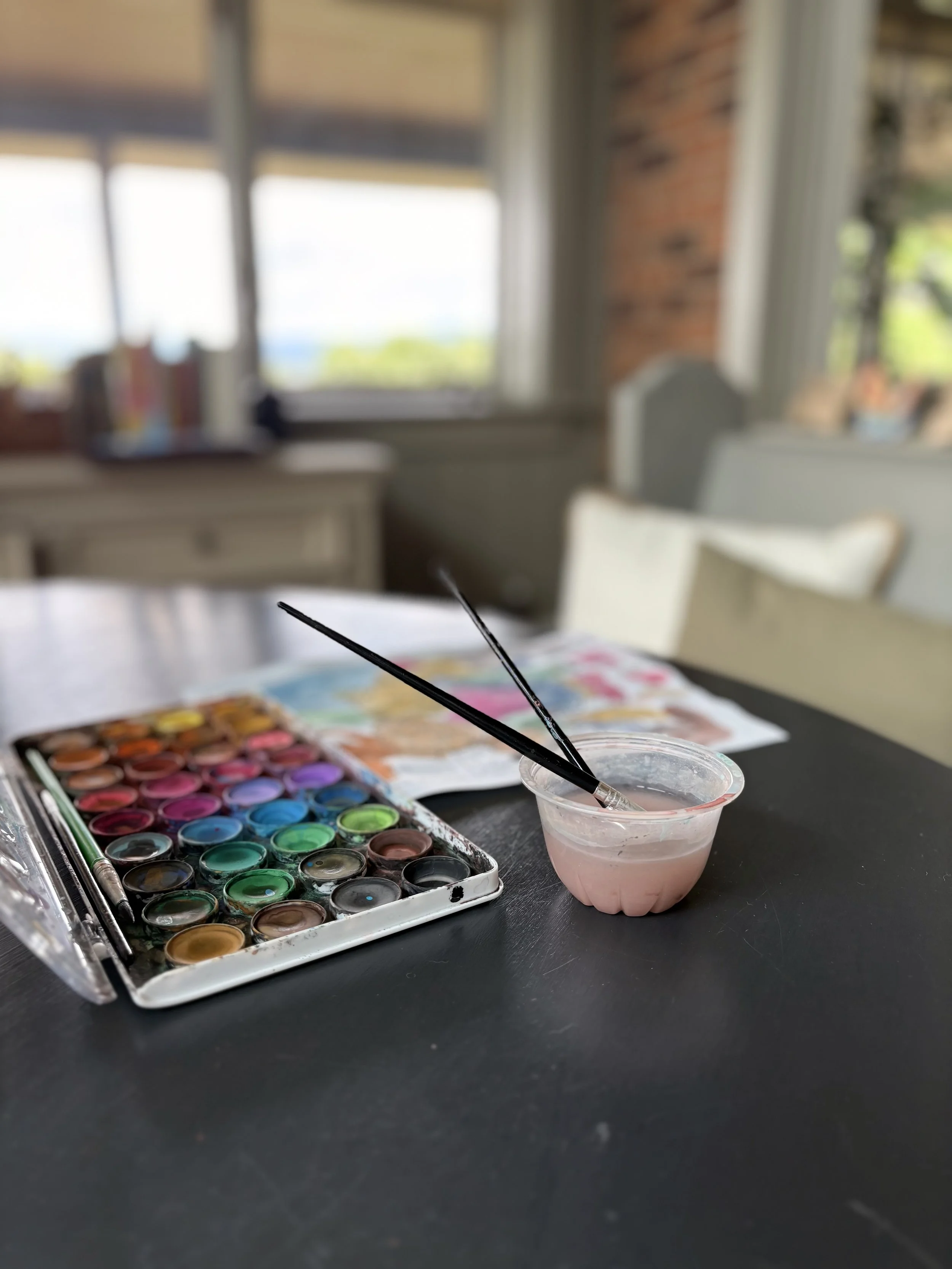
Perhaps my favorite category of supplies is this last one — art supplies! Our girls are both very creative and like to dive in with creative projects, so I like to keep our supplies stocked so they can access them whenever the mood strikes. We also incorporate a lot of creative work into our formal studies, working on daily illustrated narrations or notebook pages and artist studies. For paper, I like to keep cardstock, regular printer paper, watercolor paper, and construction paper in an easy to grab spot. I also print off coloring pages for my youngest, and she loves to use watercolors or paint pens to fill them in to her heart’s content. For our school work, we often use colored pencils, watercolor paints, or oil pastels. And without fail, we keep a big stock of pencils, ultra-fine Sharpie pens, erasers, rulers, glue, child-safe scissors, and an electric pencil sharpener at the ready. I love to use these display books for storing our school-related creations.
I hope this list of our most-used supplies and go-to resources has been a help for you — not a burden. Home educating can take so many different forms and you can add and adapt as time goes on. Feel free to share in the comments some of your favorite supplies to have on hand too!

Please note that this article contains affiliate links to products referenced. The Laurel Denise planner was gifted, but was not contingent upon a positive review. All opinions expressed are genuine and our own. To learn more about our use of affiliate links, please read our full Affiliate Disclosure.

Book Resources
The Ology: Ancient Truths, Ever New by Marty Machowski
WonderFull: Ancient Psalms Ever New by Marty Machowski
The Treasure: Ancient Story Ever New of Jesus and His Church by Marty Machowski
The Jesus Storybook Bible by Sally Lloyd-Jones
A Saint A Day by Meredith Hinds
Take-Along Guides for Kids
Nature Anatomy by Julia Rothman
Farm Anatomy by Julia Rothman
Food Anatomy by Julia Rothman
Ocean Anatomy by Julia Rothman
National Geographic Student World Atlas
How To Draw All The Animals by Alli Koch
How To Draw book series